
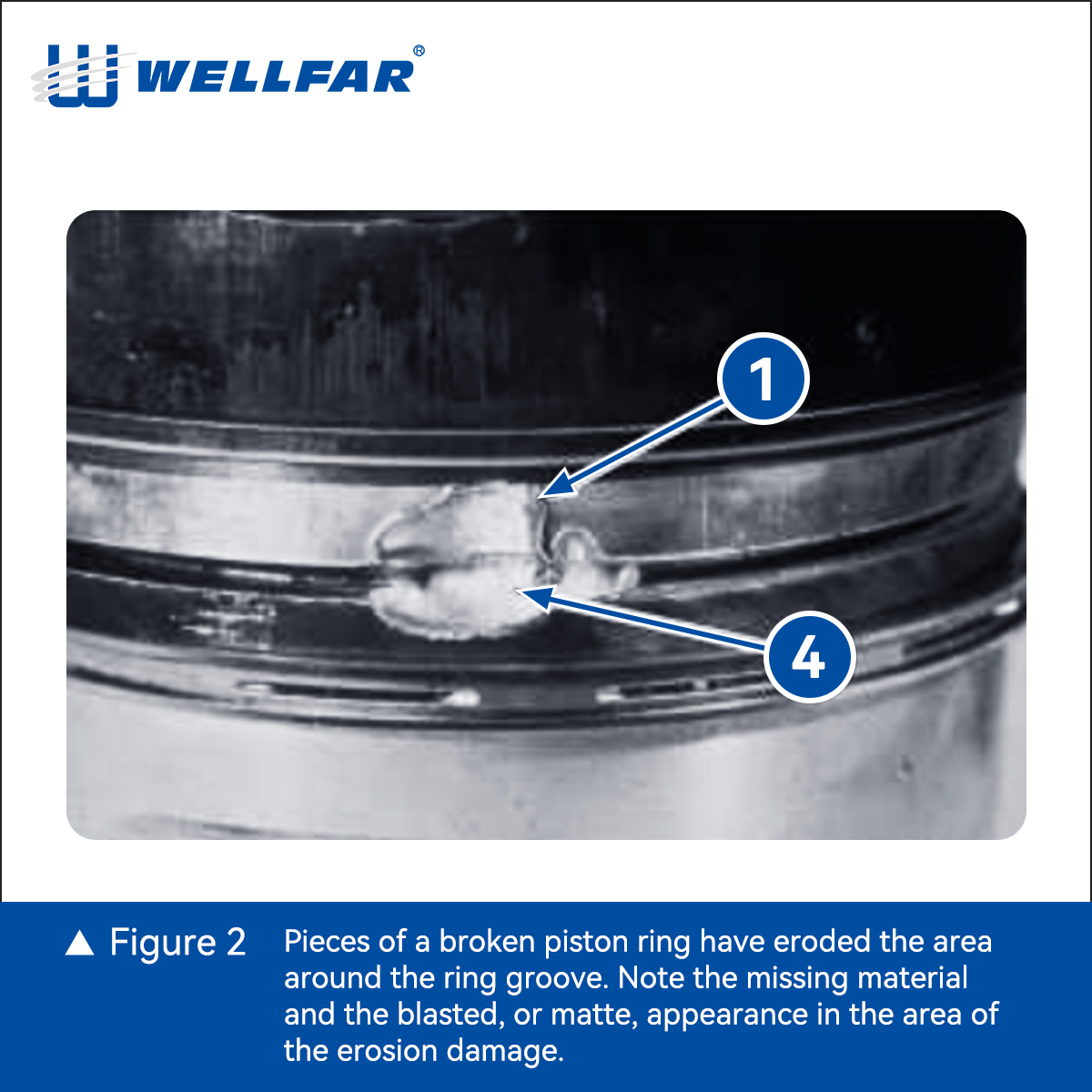
Erosion wear occurs when particles impacting a surface remove tiny bits of material from the surface. The particles doing the damage can be large or small. The energy moving the particles can simply be momentum as in a large part being "thrown" against the surface of another part. Or, if the particles are small, the energy moving the particles often comes from a moving gas (for example, sand blasting) or fluid (for example, particles in a cooling system) stream. The eroded surface will often have a sand blasted or matte finish appearance. Note: Erosive wear and abrasive wear are similar in that both involve damage due to particles. The difference between abrasive and erosive wear is the "angle of attack" of the particles. In abrasive wear, the particles move parallel to the surface and "machine" bits of material from the surface. With erosive wear, the particles impact at a steeper angle and chip bits of material from the surface. The following road signs may be observed when surfaces are damaged by erosive wear: 1.Material has been removed from the surface of the part. 2.Surfaces are dented or pitted from impacting particles. 3.Self-generated, secondary debris particles. 4.Surface has a sand blasted or matte finish appearance. Significance of Erosion Wear. Erosion wear found on parts indicates that impacting particles have damaged the surface of the part. So, as with abrasive wear, identify the particles doing the damage and the source of the particles. 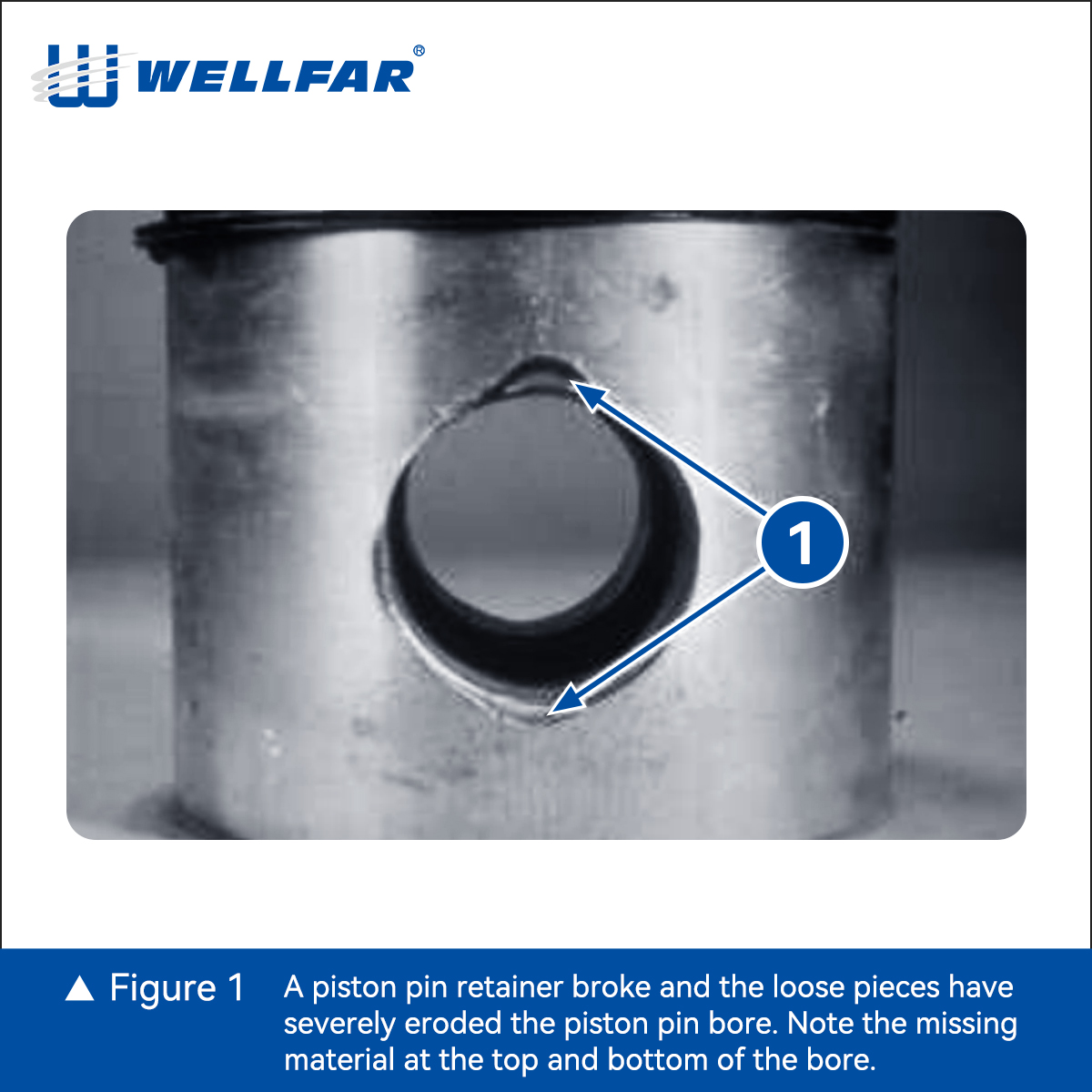
Erosion Wear
2025-12-27 03:03