
Piston fracture from mechanical contact with the cylinder head is typically caused by impact from events like hydraulic locking, a foreign object in the combustion chamber. This physical collision can result in a fractured piston crown, often leaving impact marks and leading to a catastrophic failure. Other causes include mechanical failure of components like the connecting rod, issues with timing. Causes ●Hydraulic locking: An excess of liquid in a cylinder prevents the piston from completing its stroke, causing immense force and impact with the cylinder head. ●Foreign objects: A small item, like a piece of a broken component or a piece of carbon, can get lodged in the combustion chamber and repeatedly strike the piston crown. ●Abnormal combustion: Issues like detonation, which is a premature and violent explosion of the fuel-air mixture, can damage pistons. ●Timing-related failures: Incorrect engine timing can cause the piston to collide with valves, which can then damage the piston crown. ●Mechanical failure: A broken connecting rod or bearing failure can cause the piston to move erratically, leading to a collision with the cylinder head. ●Engine over-revving: Exceeding the engine's RPM limit can cause excessive movement, potentially leading to a piston and cylinder head collision. ●Improper maintenance: Using incorrect cylinder head gaskets, or problems with the cylinder head bolts, can lead to uneven tightening and cylinder distortion, which increases the risk of piston-to-cylinder head contact. Symptoms ●Engine noise: A loud knocking, clanking, or banging sound coming from the engine. ●Misfiring: The engine may run rough or misfire, which is a sign of a damaged cylinder. ●Reduced power: The engine's performance will be noticeably diminished. ●Excessive blowby: Exhaust gas leaking past the piston rings into the crankcase. ●Engine oil leaks: The increased pressure from the piston/cylinder head impact can lead to oil leaks. ●Engine overheating: The excessive friction and heat generated from the damage can cause the engine to overheat. 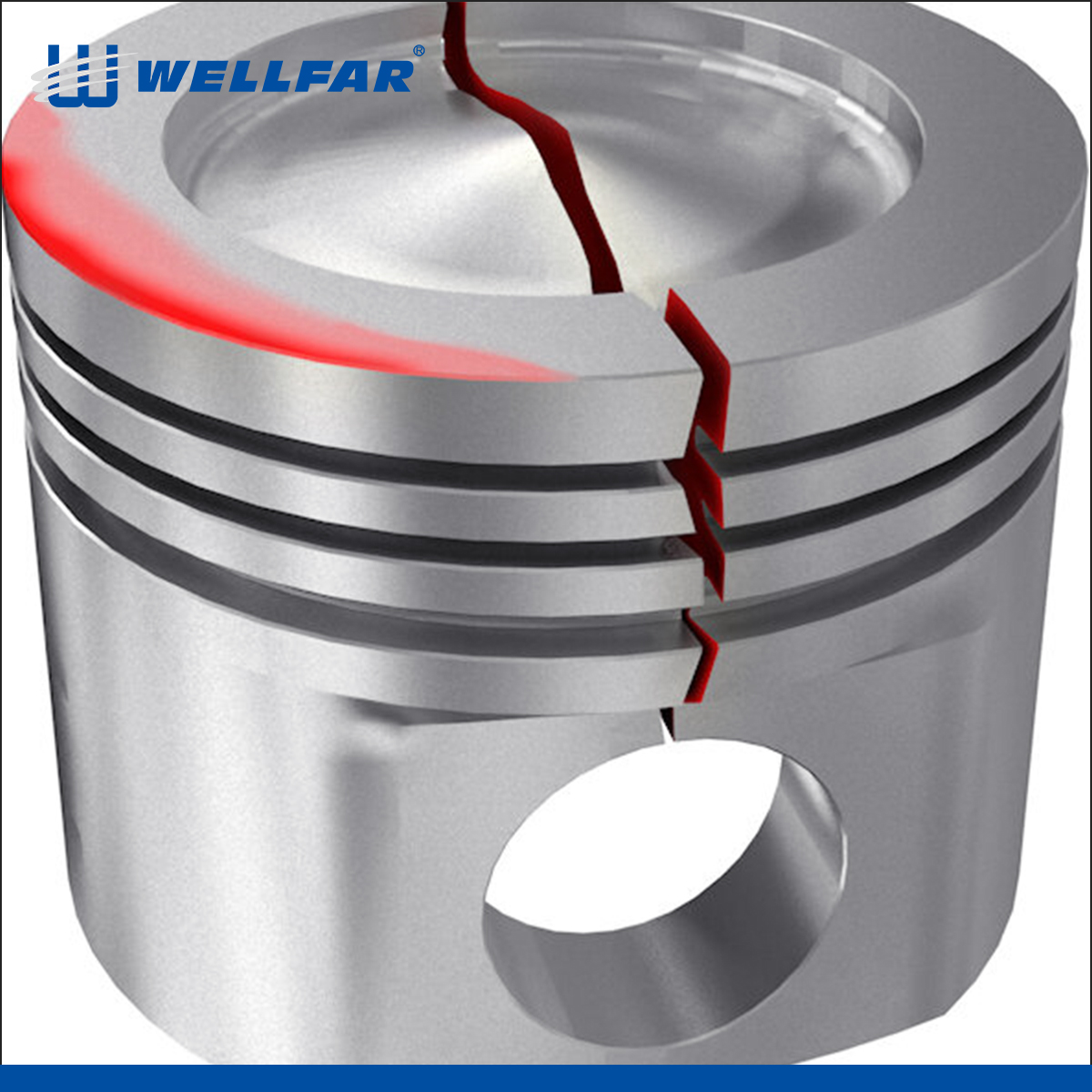
Piston Fracture Due To The Mechanical Contact
2026-01-16 02:02