
Piston rings for current internal combustion engines have to meet all the requirements of a dynamic seal for linear motion that operates under demanding thermal and chemical conditions. In short, the following requirements for piston rings can be identified: ①Low friction, for supporting a high-power efficiency rate ②Low wear of the ring, for ensuring a long operational lifetime ③Low wear of the cylinder liner, for retaining the desired surface texture of the liner ④Emission suppression, by limiting the flow of engine oil to the combustion chamber ⑤Good sealing capability and low blow-by for supporting the power efficiency rate ⑥Good resistance against mechano-thermal fatigue, chemical attacks and hot erosion ⑦Reliable operation and cost effectiveness for a significantly long time The first piston rings used in an engine had the sole task of sealing off the combustion chamber, thus preventing the combustion gases from trailing down into the crankcase. This development increased the effective pressure on the piston. Ramsbottom and Miller were among the pioneers to investigate the behavior of the piston rings in steam engines. Ramsbottom, in 1854, constructed a single-piece, metallic piston ring (Ramsbottom invented the first piston ring). The free diameter of the ring was 10 per cent larger than the diameter of the cylinder bore. When fitted in a groove in a piston, the ring was pressed against the cylinder bore by its own elasticity. Previous piston rings had consisted of multiple pieces and with springs to provide an adequate sealing force against the cylinder bore. Miller, in 1862, introduced a modification to the Ramsbottom ring. This modification consisted of allowing the steam pressure to act on the backside of the ring, hence providing a higher sealing force. This new solution enabled the use of more flexible rings, which conformed better to the cylinder bore.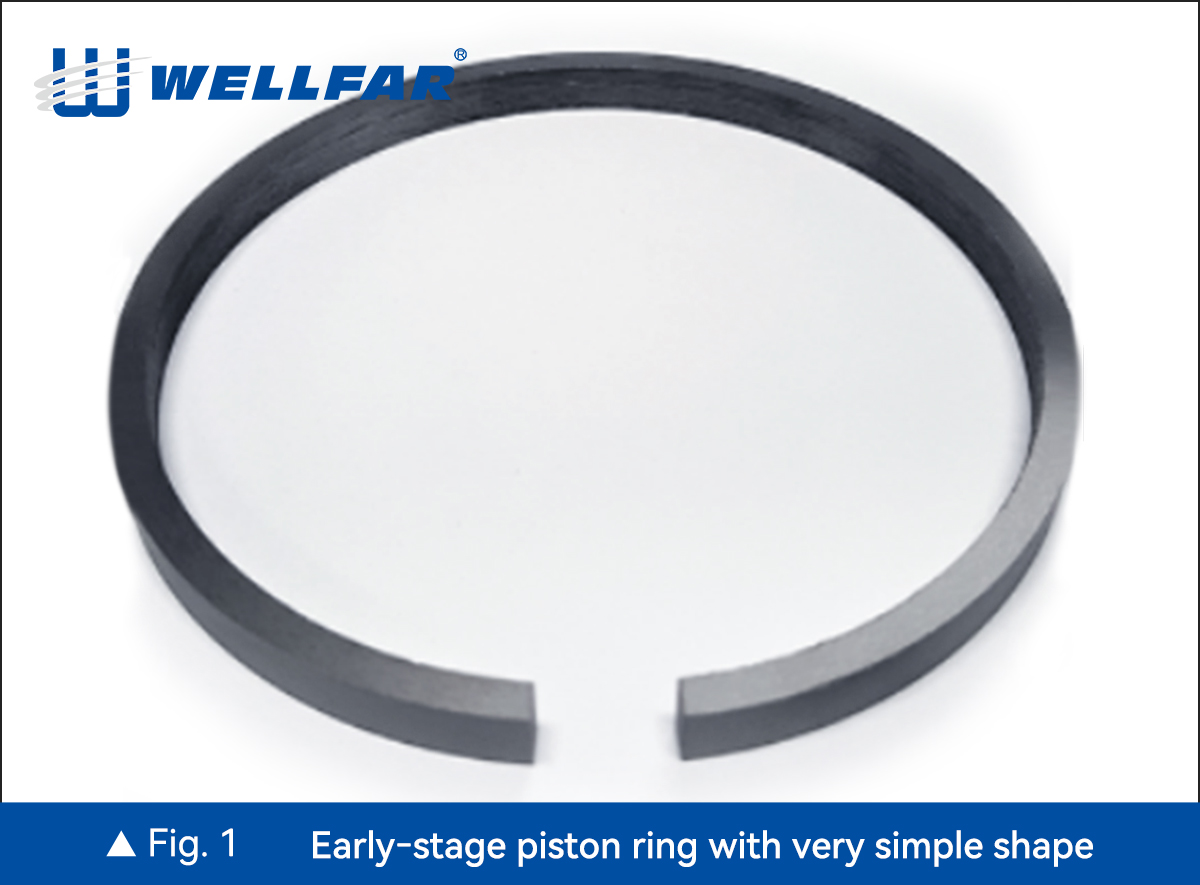
Piston Ring Requirement And Introduction
2025-01-01 10:35