
Aluminum pistons are widely used in heavy-duty (HD) diesel engines due to their favorable balance of thermal, mechanical, and manufacturing characteristics. However, they also present inherent limitations under extreme operating conditions. The primary advantage of aluminum pistons is their low density, typically about one-third that of steel. This significantly reduces reciprocating mass, leading to lower inertia forces, improved engine responsiveness, and reduced stress on the cranktrain and connecting rod. Aluminum also offers excellent thermal conductivity (≈120–180 W/m·K), which enables efficient heat dissipation from the piston crown to the cooling system. This reduces the risk of localized overheating, thermal fatigue, and piston crown cracking. Another key benefit is good manufacturability. Aluminum alloys are well-suited for casting and forging, allowing complex geometries (e.g., oil galleries, ring lands) and cost-effective high-volume production. Additionally, aluminum pistons exhibit good scuffing resistance when paired with proper coatings and lubrication due to their compatibility with cylinder liner materials. The main drawback is limited high-temperature strength. Aluminum alloys lose significant mechanical strength above ~250–300°C, making them vulnerable to creep, plastic deformation, and thermal fatigue under high peak firing pressures typical of HD diesel engines. This restricts their application in ultra-high load conditions. Aluminum also has a high coefficient of thermal expansion (about twice that of steel), requiring larger cold clearances. This can lead to piston slap, increased noise, and higher blow-by during cold start conditions. Another concern is lower fatigue strength compared to steel, particularly in the ring land and pin boss regions where cyclic stresses are severe. This may result in crack initiation and propagation over long service intervals. Finally, wear resistance is relatively poor, necessitating surface treatments such as anodizing, graphite coating, or steel ring carriers to enhance durability. Aluminum pistons provide clear advantages in weight reduction and heat transfer, but their thermal and mechanical limitations require careful design, alloy selection, and cooling strategies in HD diesel applications.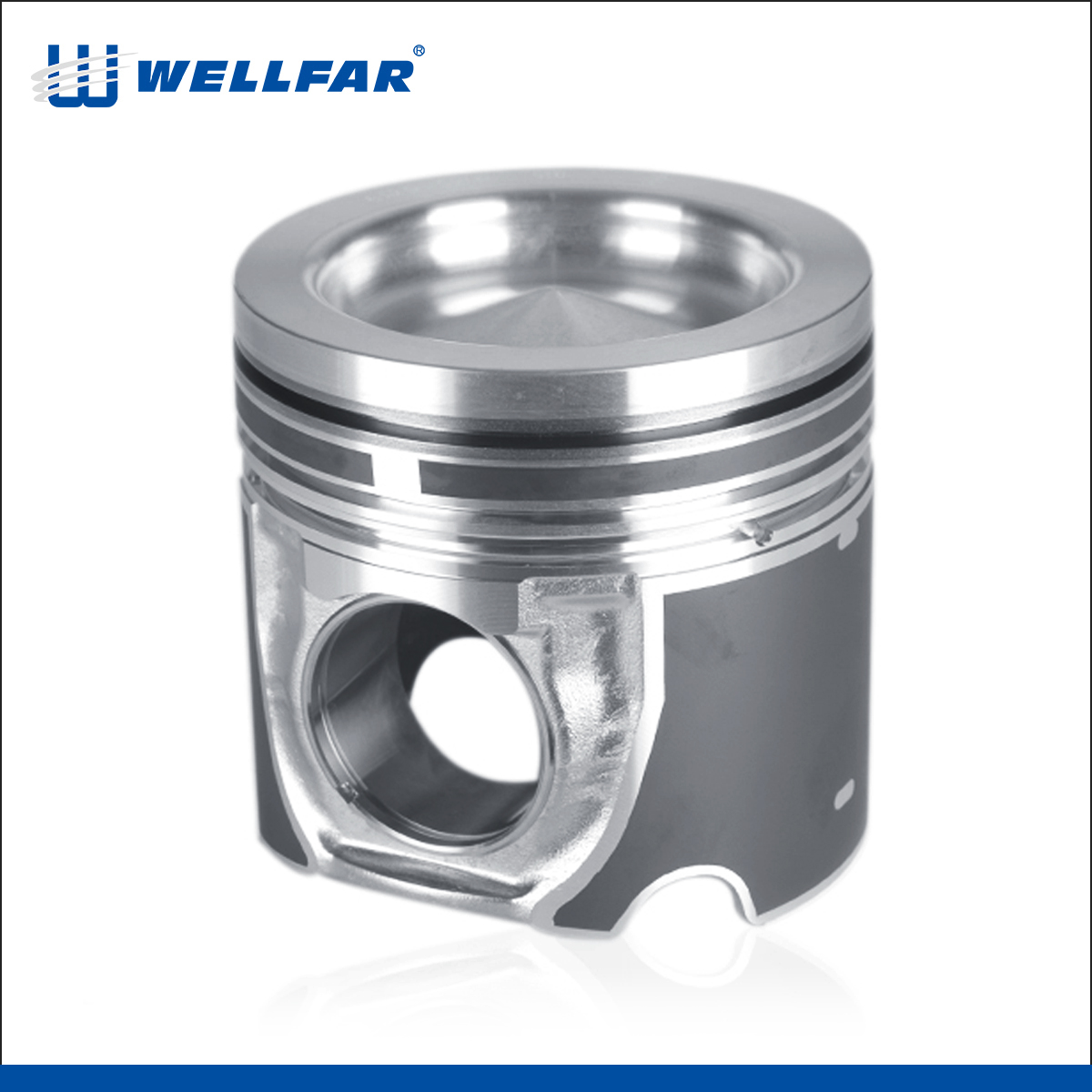
Pros And Cons Of HD Diesel Engine Aluminum Piston
2026-04-27 06:01