
Welded steel pistons are increasingly adopted in heavy-duty (HD) diesel engines, particularly for high peak firing pressure (PFP) applications, due to their superior mechanical and thermal robustness compared to aluminum designs. The most significant advantage is high-temperature strength and creep resistance. Steel maintains its mechanical properties at temperatures exceeding 400°C, making welded steel pistons highly resistant to crown deformation, bowl rim collapse, and thermal fatigue cracking under extreme combustion loads. They also exhibit excellent fatigue strength, especially in critical areas such as the combustion bowl and pin boss. This enables reliable operation under very high cylinder pressures (>220 bar), supporting engine downsizing and increased specific power. Another key benefit is low coefficient of thermal expansion (approximately half of aluminum). This allows tighter piston-to-liner clearances, reducing blow-by, oil consumption, and piston slap noise, particularly during cold start conditions. Welded steel pistons provide superior wear resistance, often eliminating the need for additional ring carriers. The ring groove stability is significantly improved, maintaining sealing performance over long service intervals. While the primary drawback is high mass density, resulting in heavier pistons. This increases reciprocating inertia forces, leading to higher stresses on the crankshaft, connecting rod, and bearings, potentially limiting maximum engine speed. Steel also has lower thermal conductivity (≈40–50 W/m·K), which reduces heat dissipation efficiency. As a result, piston crown temperatures can be higher, requiring advanced cooling strategies such as oil gallery cooling and optimized combustion design. Manufacturing complexity is another disadvantage. Welded steel pistons typically consist of multiple components (crown and skirt) joined by friction welding, increasing production cost and process sensitivity. Quality control of weld integrity is critical to avoid failure at the joint. Additionally, scuffing risk can be higher if lubrication or surface treatments are inadequate, due to less inherent material compatibility with liner surfaces compared to aluminum. Welded steel pistons excel in durability and high-load capability, making them ideal for modern HD diesel engines, but they require careful design trade-offs in weight, thermal management, and manufacturing cost.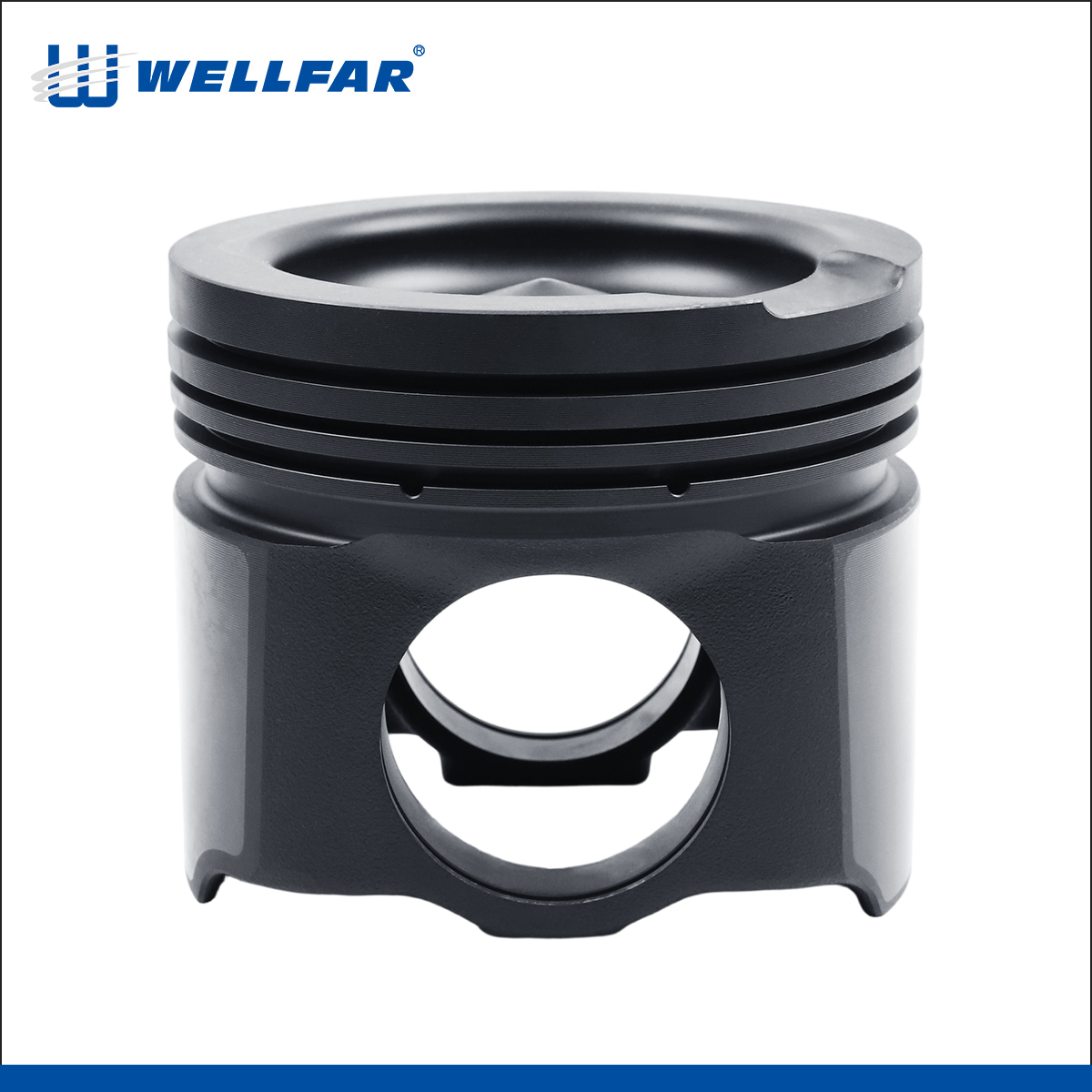
HD Diesel Engine Welded Steel Piston Advantages And Disadvantages
2026-04-30 01:47