
The unveiling of the 2027 Cummins X15 signals a major engineering pivot to meet the stringent EPA 2027 standards, specifically the 90% reduction in NOx emissions. From a technical standpoint, four key deductions stand out: 1. 48V Electrification of Aftertreatment The most radical change is the "Twin Module" aftertreatment equipped with 48-volt electric heaters. Powered by a dedicated 48V alternator, these heaters ensure the SCR catalysts reach operating temperature almost instantly. This eliminates the "cold start" emissions gap, a primary hurdle for modern diesel compliance. 2. Analysis-Led Weight Optimization To offset the added mass of the 48V system and dual canisters, Cummins utilized sculpted block design. By using computer modeling to remove material from non-structural areas and reinforcing high-stress points, the engine achieves weight neutrality compared to the 2024 model while maintaining a 605 hp / 2,050 lb-ft rating. 3. The HELM Platform Architecture The X15 is the flagship of the HELM™ (Higher Efficiency, Lower Emissions, Multiple Fuels) platform. This modular approach uses a unified base engine (block/crank) with interchangeable cylinder heads and fuel systems. This allows Cummins to scale production across diesel, natural gas, and hydrogen variants while streamlining the supply chain. 4. Internal Efficiency Gains Despite the parasitic load of new emissions hardware, Cummins claims a 4% to 7% fuel economy improvement. This is deduced to come from: · Higher Compression: New piston bowl geometries. · Friction Reduction: Advanced coatings on piston skirts and liners. · Serviceability: A shift toward eco-friendly cartridge-style filters over traditional spin-on cans. By betting on electric heating and modular architecture, Cummins is positioning itself to maintain heavy-duty performance without the reliability compromises often seen in previous "emissions-first" engine cycles.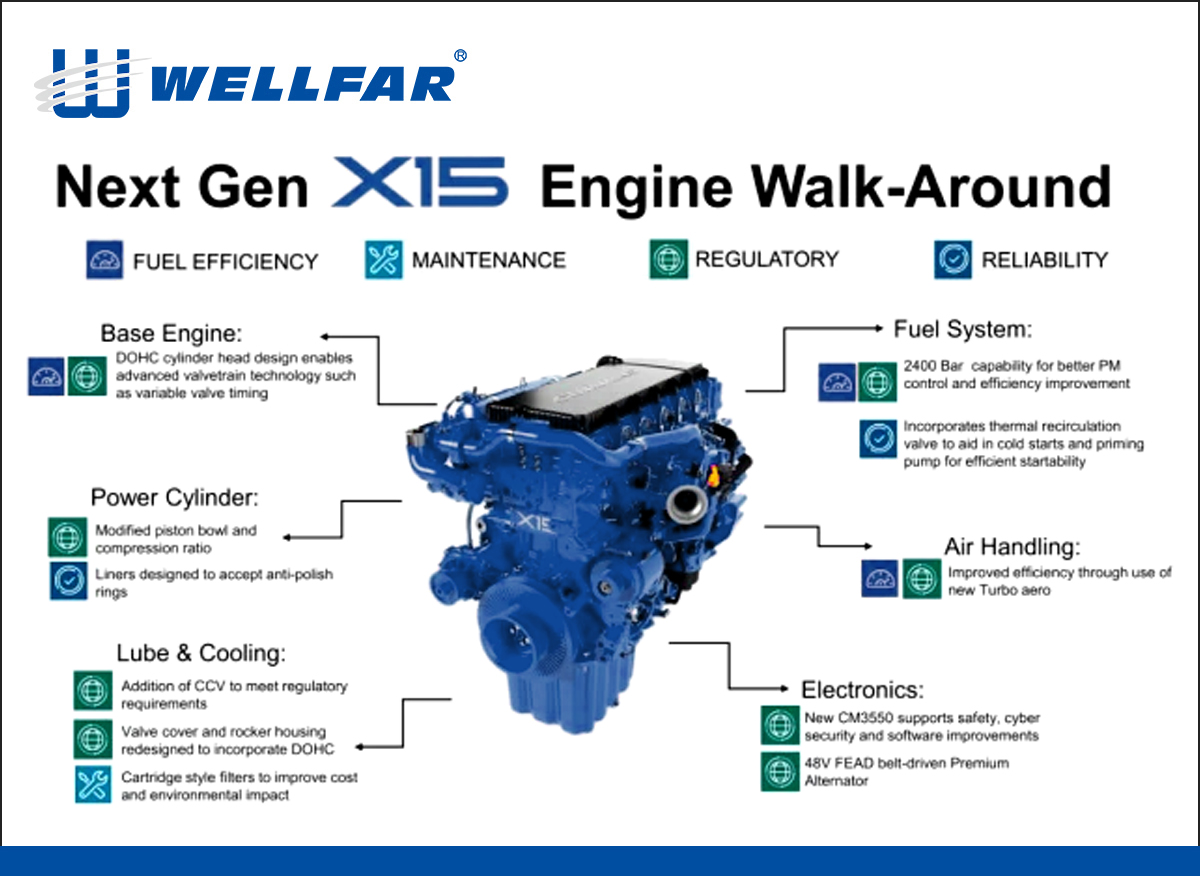
2027 Cummins X15 Engine Introduction
2026-05-27 05:31