
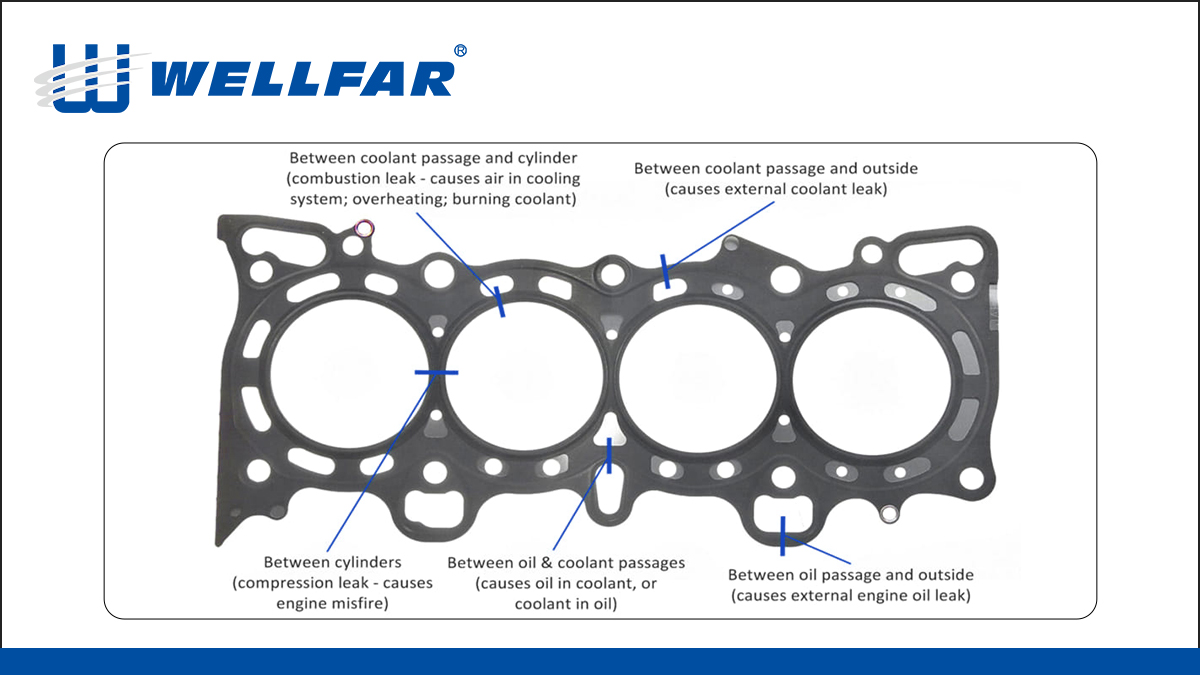
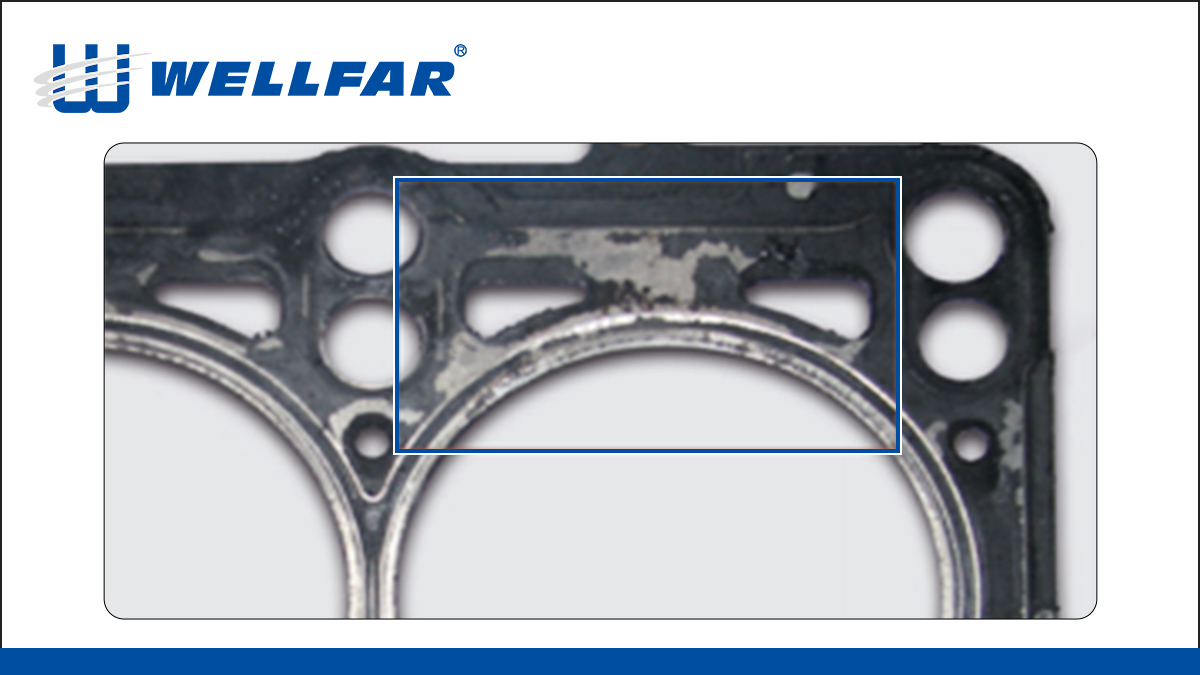
This is the most common failure mode, characterized by erosion or burn-through near the combustion sealing ring. The phenomenon often appears as blackened or etched on the gasket layer. Root causes include insufficient clamping force, cylinder head lift under peak firing pressure, or uneven bolt preload. Contributing factors may include detonation, over-boosting, or improper torque sequence. Preventive actions include optimizing head bolt design (e.g., torque-to-yield bolts), ensuring correct tightening procedures, and verifying combustion pressure limits. 2. Fluid leakage (coolant or oil): Leakage paths may develop at sealing beads or embossments, especially around oil galleries or coolant passages. This is typically caused by surface irregularities such as excessive roughness (Ra too high) or waviness on the cylinder head or block. MLS gaskets require very smooth and flat surfaces (often Ra < 30 µin). Preventive measures include strict surface finish control, proper machining processes, and avoiding reuse of worn components. 3. Fretting wear and coating degradation: Relative micro-motion between the cylinder head, gasket, and engine block can cause fretting wear, leading to coating loss (usually elastomer or rubber coating). This reduces sealing performance over time. Causes include thermal expansion mismatch, insufficient clamp load retention, or engine vibration. Prevention involves improving joint rigidity, ensuring proper material selection, and maintaining stable thermal conditions. 4. Fatigue cracking of layers: Repeated thermal and pressure cycling can induce fatigue cracks in the steel layers, especially near embossed sealing areas. This is often linked to cyclic head lift or improper gasket design. Preventive actions include optimizing gasket layer thickness, embossment geometry, and material strength.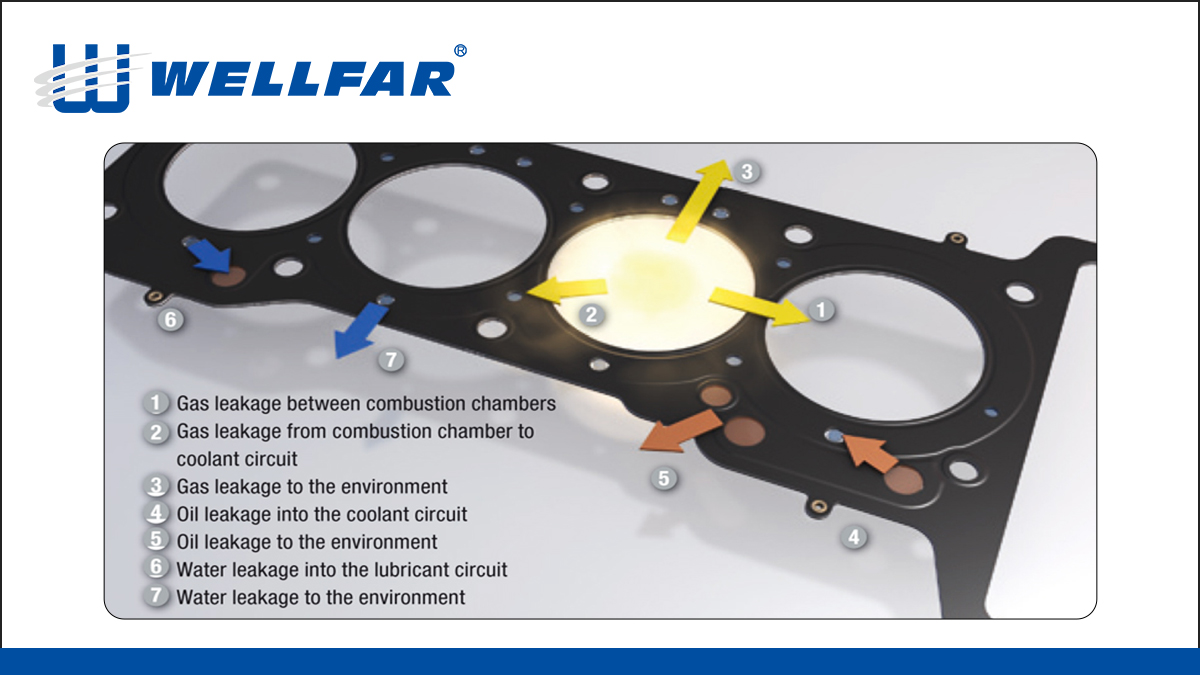
MLS Gasket Failure Mode Analysis
2026-05-29 02:20