[ Appearance ] Excessive wear areas can be seen near the parting lines on opposite sides of the upper and lower bearing shells. [Possible causes ] • Using too large a socket to tighten the bearing cap. In this case, the socket crowds against the cap causing it to shift. • Reversing the position of the bearing cap. • Inadequate dowel pins between bearing cap and housing (if used), allowing the cap to break away and shift. • Improper torquing of cap bolts resulting in a “loose” cap that can shift positions during engine operation. • Enlarged cap bolt holes or stretched cap bolts, permitting greater than normal play in the bolt holes.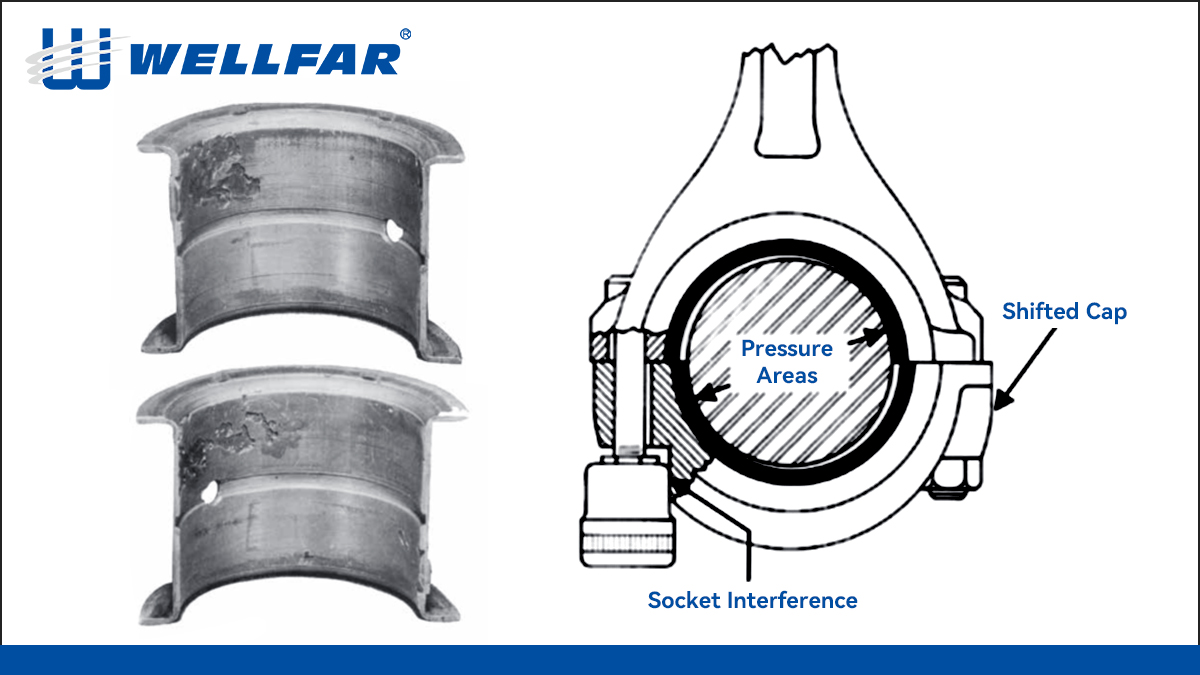
Engine Bearing Failure Models. Failure Analysis – Shifted Bearing Cap
2026-08-20 06:05