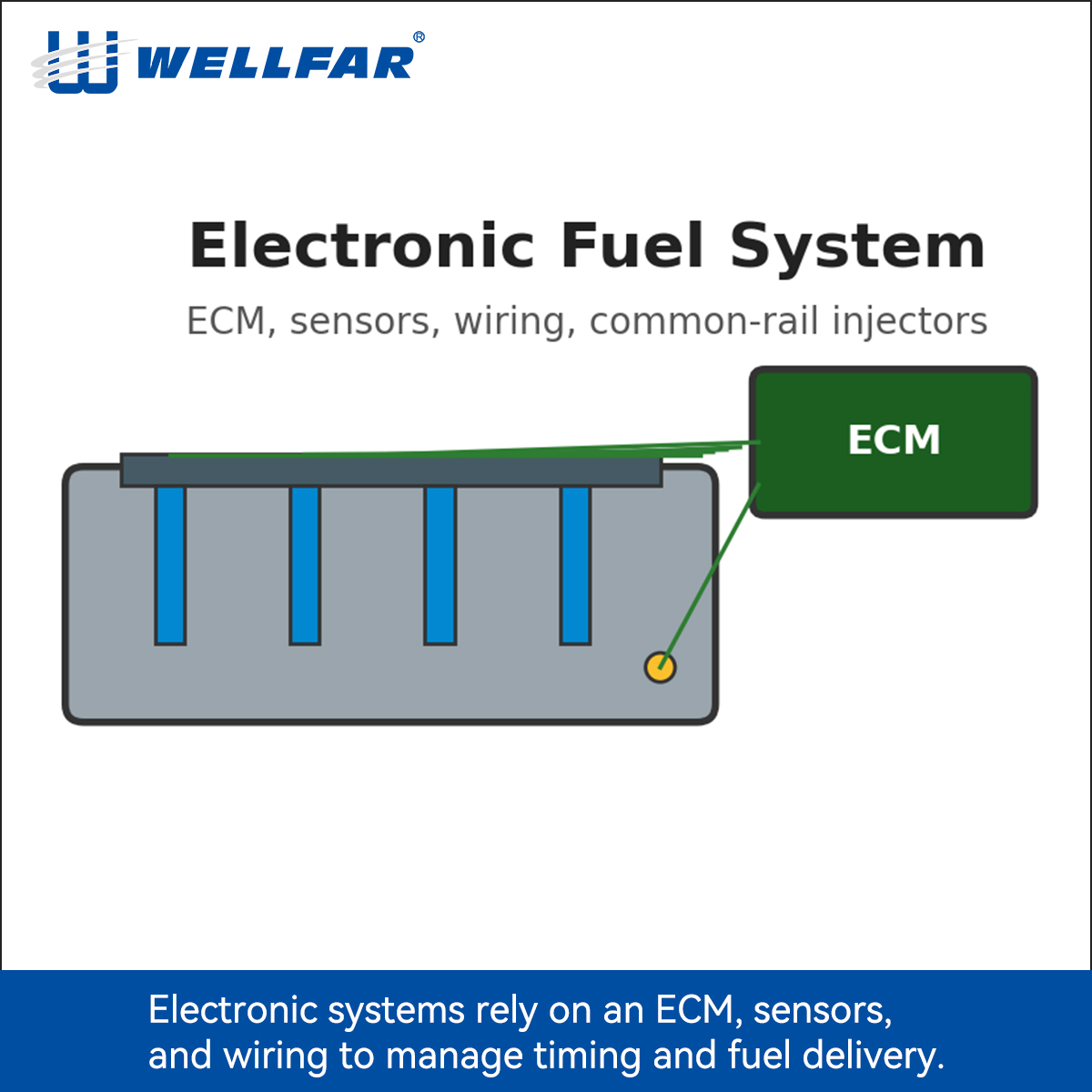
Mechanical vs. Electronic Cummins Engines Cummins diesel engines come in two broad types: mechanical and electronic. The difference changes how the engine controls fuel, and it changes which parts you need. Knowing the type helps you order correctly and helps customers find problems. A mechanical engine controls fuel with springs, gears, and a mechanical pump. It does not need a computer to run. The well-known inline P-pump and the VE rotary pump are mechanical. Buyers like mechanical engines because they are simple, easy to repair, and keep running even in basic conditions. If there is no power for diagnostics, a mechanical engine can still be fixed with hand tools. An electronic engine uses a computer, called an ECM (Engine Control Module), to control fuel. It uses sensors and wiring to manage timing and fuel delivery. Common-rail and other electronic systems give better power, smoother running, and cleaner exhaust. But they need working electronics and proper diagnostic tools. What This Means for Parts •Mechanical engines: need pump parts, governor parts, and mechanical injectors. •Electronic engines: need sensors, wiring parts, electronic injectors, and sometimes the ECM itself. •Injectors: are not the same between the two types. Never mix them. •Diagnosis: mechanical problems are often found by feel and measurement; electronic problems often need a scan tool. How to tell them apart: mechanical engines have a large pump with fuel lines and a throttle linkage. Electronic engines have wiring connectors and sensors on the engine and pump. For your business, stock parts for both, but keep them clearly separated. A common and costly mistake is sending a mechanical injector for an electronic engine, or the reverse. Always confirm the engine type and build code before ordering fuel-system parts.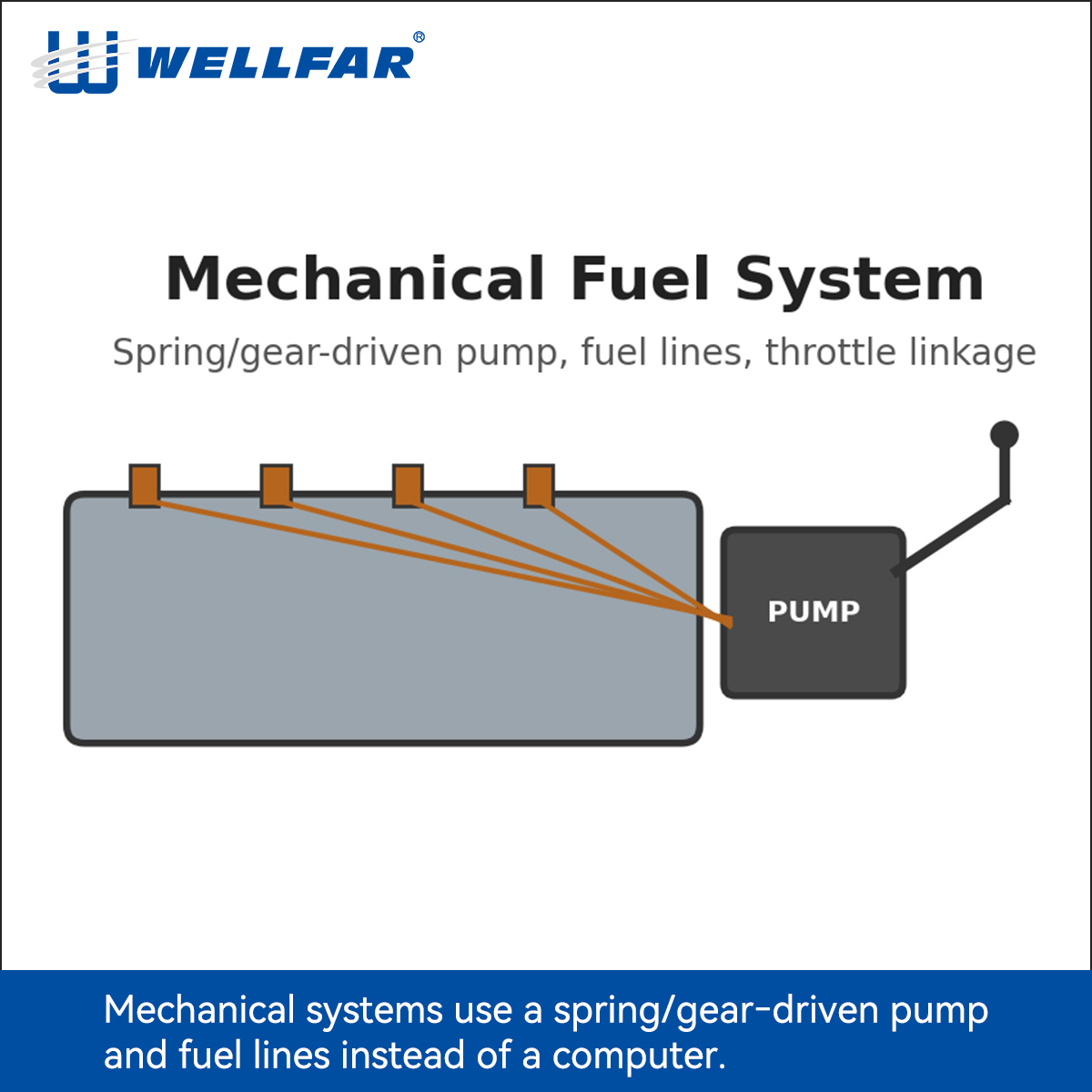
Mechanical VS Electronic Cummins
2026-10-21 05:56